Landowners
How landowners can work with Kisiel Group: a subject-to-planning option or a profit-share joint venture, backed by our own capital.
Lukasz Kisiel MCIOB, Chartered Construction Professional
24 October 2026
Kisiel Group is an award-winning developer and contractor working across London and the Home Counties. We work with landowners in two ways: a subject-to-planning option, or a profit-share joint venture. We also put our own money into the schemes we build, so our interests line up with yours.
We work on three types of development: ground-up new build, airspace developments and conversions. We recently completed a scheme of executive town houses in West Wimbledon with a GDV of c. £8.5m, and we are now working on a scheme of around 70 apartments in North London with a GDV of circa £25m.
We are developer and builder in one. We find the site, secure planning and build it with our own team. One business owns the result from day one to handover, so nothing gets lost between consultants and contractors.
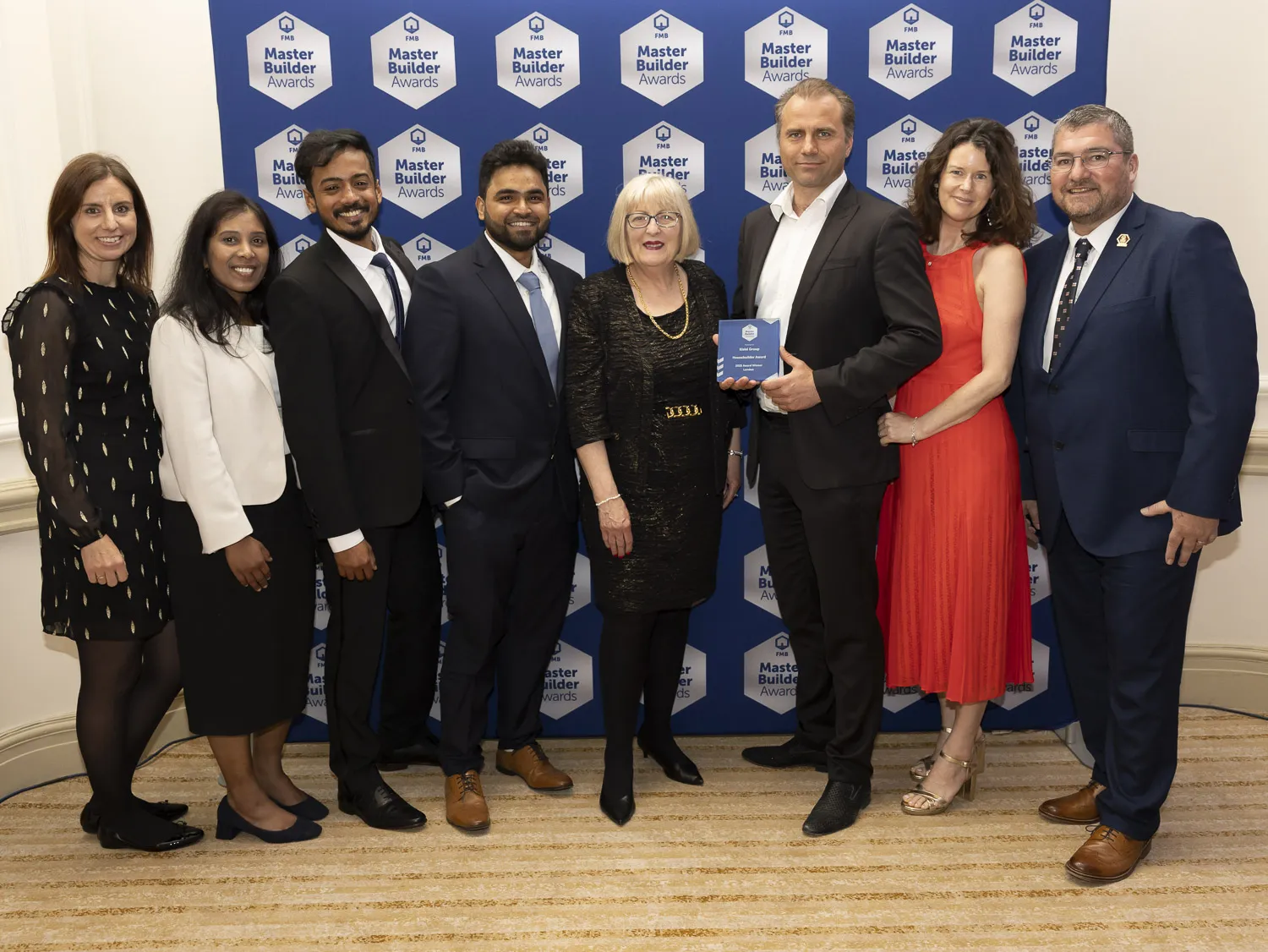
Our work has been recognised by the Federation of Master Builders, including the Housebuilder Award at the London Master Builder Awards. We use Modern Methods of Construction (MMC) with BOPAS-accredited systems, which supports lender and mortgage confidence.
Since 2007 we have built up our own teams for each stage of a scheme: land and planning, design development, construction management and sales or rental of completed properties. Fewer handovers between outside firms means fewer gaps for cost and time to leak out. It also means a landowner deals with the same people from the first site visit to the day the last home is sold.
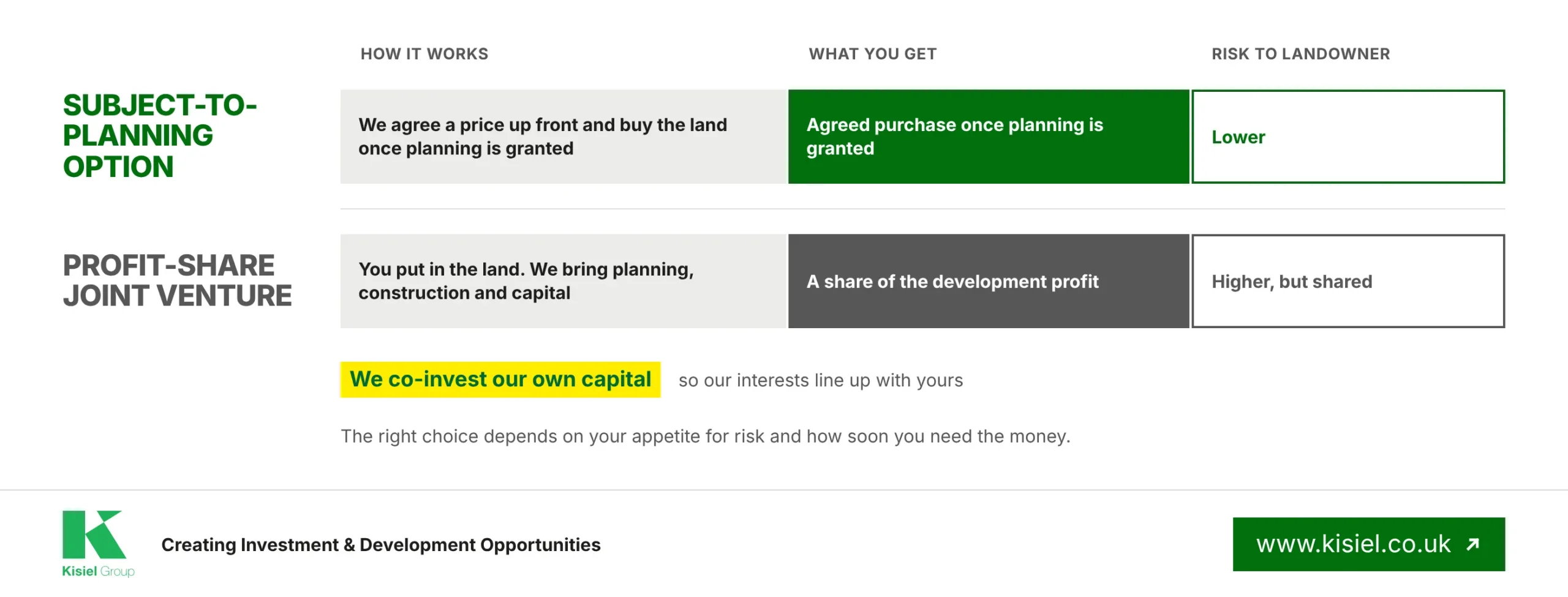
There are two routes. With a subject-to-planning option, we agree a price up front and buy the land once planning is granted. You take little risk and get certainty. With a profit-share joint venture, you put in the land and we bring planning, construction and capital, then we share the profit. There is more upside, and the risk is shared. The right choice depends on your appetite for risk and how soon you need the money.
A landowner who develops alone carries all the planning risk, build cost risk and market risk. In a joint venture those risks are shared with a partner who manages them every day.
Planning: we have extensive experience of getting schemes through planning, including difficult sites. Build: we build ourselves, so we control cost, quality and programme. Money: we co-invest our own capital. If a scheme does badly, we lose too, so we have every reason to keep costs down and the programme tight.
It starts with an appraisal. We look at the site, the planning history and what the local market will pay, and we tell you honestly what we think the site can deliver. If the numbers work, we agree heads of terms setting out who puts in what and how the profit is split. We then run the planning application, fund and manage the build, and sell the finished homes. You stay informed at each stage, and the agreed split is paid out when the scheme is sold. Every deal is different, and both sides should take their own legal and tax advice before signing.
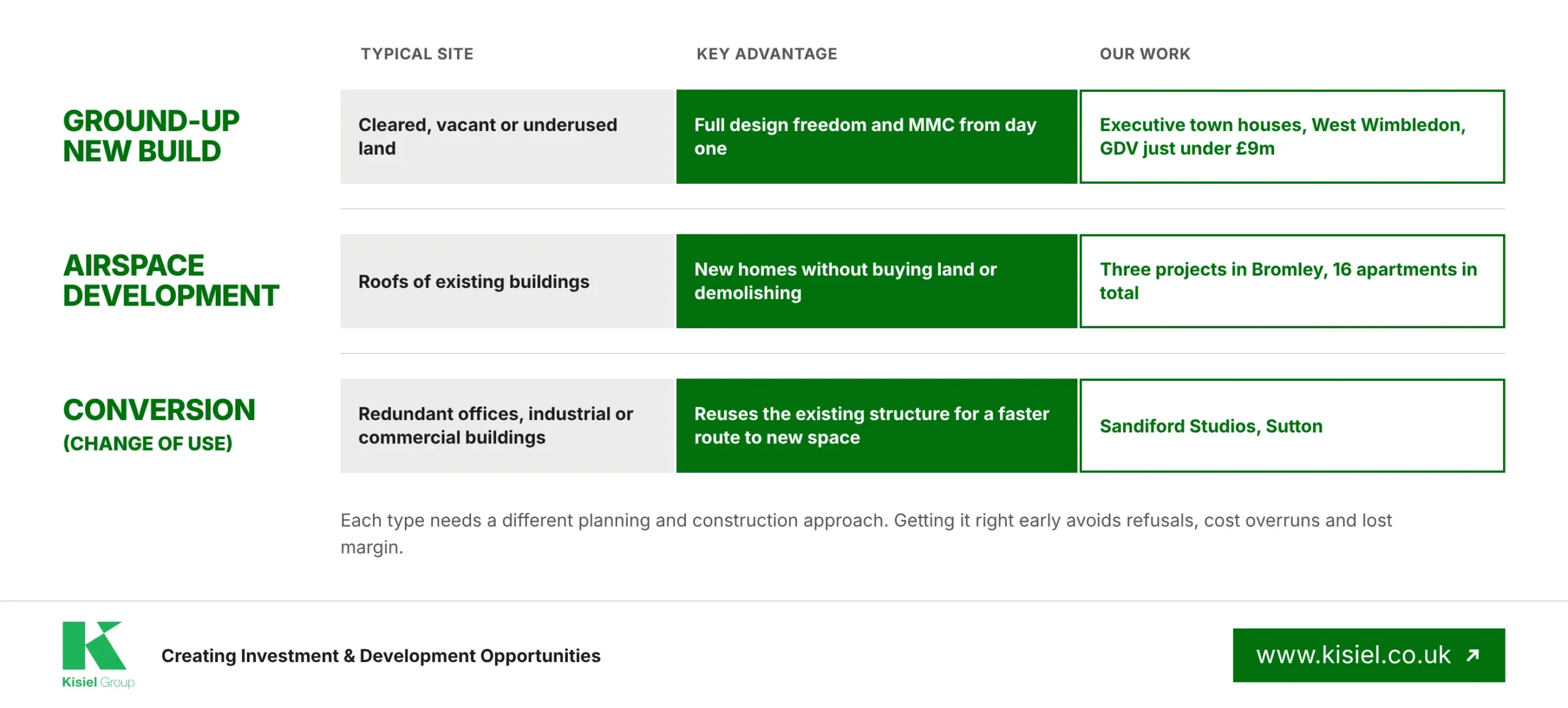
We focus on three types of development. Each needs a different planning and construction approach, and getting it right early avoids refusals, cost overruns and lost margin.
New homes on cleared, vacant or underused land. This gives full design control and lets us use MMC from the start, including Structural Insulated Panels (SIPs), Light Gauge Steel (LGS) framing and modular construction.
We recently completed executive town houses in West Wimbledon with a GDV of c. £8.5m. We are now working on a scheme of around 70 apartments in North London with a GDV of circa £25m. We also have a scheme with TfL in planning under the GLA Small Sites Small Builders programme.
New homes built on top of existing buildings. There is no new land to buy and no demolition, and the building owner unlocks value from a roof they already own. These schemes need careful structural surveys, party wall agreements and a build method that keeps disruption to existing residents low. Lightweight MMC systems suit this work well.
We are currently working on three airspace projects in Bromley for a single landowner, delivering 16 apartments in total.
Change of use from redundant offices, industrial and commercial buildings. Depending on the building, the route is permitted development (prior approval) or full planning. Reusing the existing structure saves time and embodied carbon, but it needs proper structural, fire safety, daylight and building regulations work to get right.
A recent example is Sandiford Studios in Sutton. We converted an office and warehouse building at 5 Sandiford Road into flexible creative workspace, with a warehouse studio, media studio, offices and a communal hub, now let to local businesses.
We look at materials, methods and design before money is committed. Where there is a cheaper way to get the same or better result, we take it. Every pound saved goes to margin, not contingency. We apply this across new build, airspace and conversion schemes, because each has its own cost drivers.
In practice this means questions like: can a lighter frame reduce the foundations? Can a smarter layout fit one more home on the same footprint? Can standard window and bathroom sizes cut waste and lead times? Because we design and build in-house, these decisions are made early, before drawings are fixed, instead of being found as expensive changes halfway through the build.
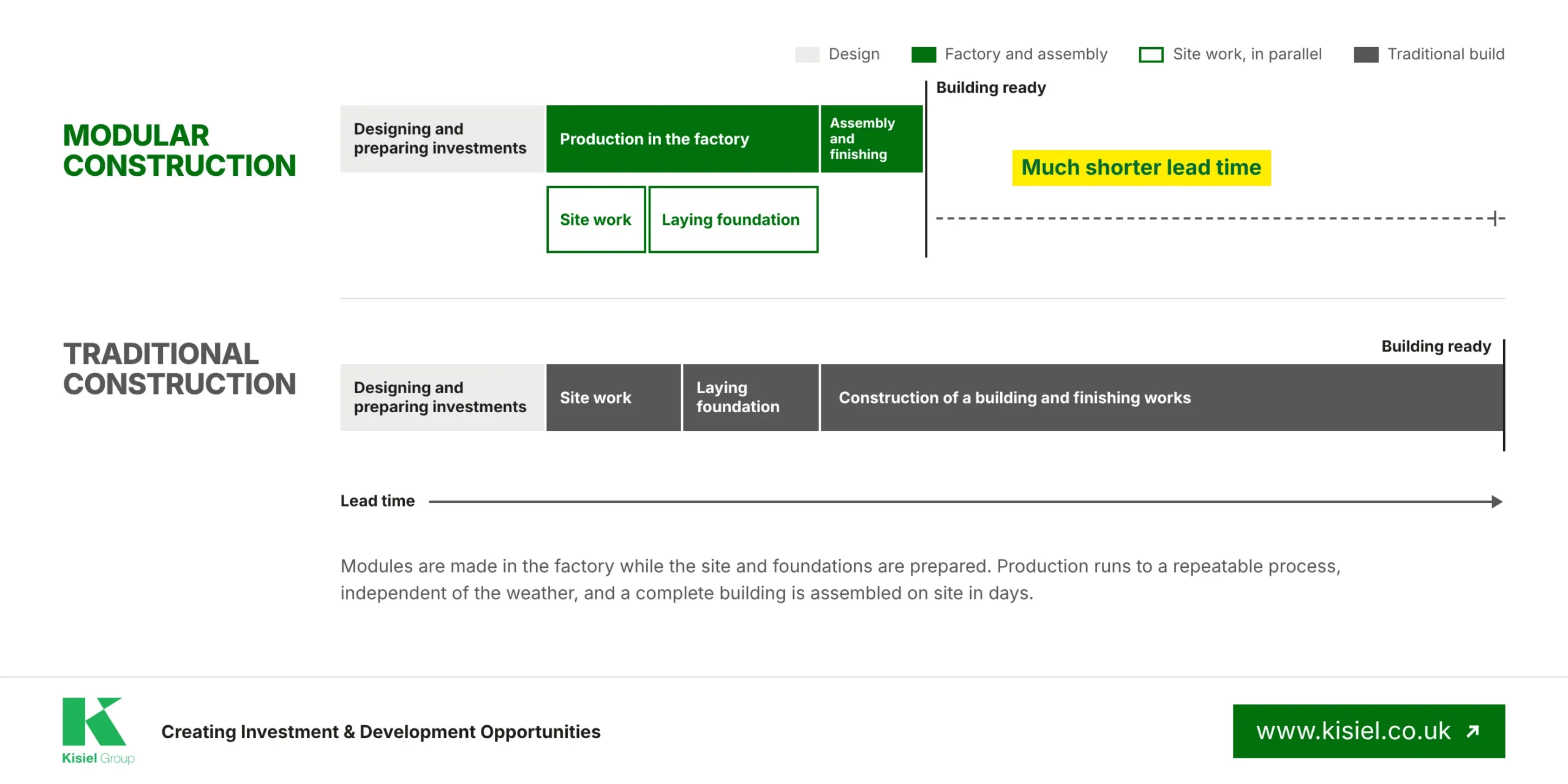
We use Structural Insulated Panels (SIPs), Light Gauge Steel (LGS) framing and modular construction, all using BOPAS-accredited systems. Components are made in a factory and assembled on site.
Compared with traditional building, this can significantly shorten programmes. Modules are made off site while the groundworks go ahead, so work runs in parallel instead of one trade after another. Factory conditions give tighter tolerances and fewer defects than wet trades exposed to the weather. A shorter build means lower finance costs and less exposure to material price rises.
Before signing, check three things. First, the partner's planning record, because delays eat into land value. Second, the quality of their completed schemes, so visit them, not just the brochure. Third, whether they put their own money in. A partner with capital at stake behaves differently from a contractor paid by the hour.
Also ask who will actually build the scheme. Many developers sub-contract the whole build, which adds another layer of margin and another party to manage. Ask how often they will report to you, what happens if planning is refused, and how the profit split is calculated. A good partner will answer all of this clearly and put it in writing.
We co-invest our own capital alongside our partners in carefully selected developments. That gives us a direct interest in controlling costs and timing. Any investment opportunity is subject to its own terms and professional advice.
We look at sites of all sizes across London and the Home Counties, from small infill plots and rooftops for a handful of homes up to larger schemes of around 100 or more apartments or houses.
No. Most landowners come to us before planning. Securing planning is part of what we do, and it is where most of the value in a site is created.
It depends on the site. Planning can take from 9 months to over two years, and the build typically follows straight after. We give a realistic timeline at the appraisal stage.
Yes. Airspace developments and some conversions are built while the existing building stays in use. We plan the work to keep disruption to residents and tenants low.
Kisiel Group brings planning, construction and capital under one roof, with a track record across new build, airspace and conversion schemes. We offer landowners a choice between the certainty of a subject-to-planning option and the upside of a joint venture, and we back our schemes with our own money.
Have land or a site in London or the Home Counties? Sell your land to Kisiel Group on a subject-to-planning option or a joint venture. Looking to put capital into development? See how you can co-invest with us. Need a builder for your own scheme? Meet our main contractor team in London.
Tell us about it. You will speak to the people who make the decisions.