Investors
How airspace development works, where the value comes from, the planning routes, and the risks investors should understand before committing capital.
Lukasz Kisiel MCIOB, Chartered Construction Professional
26 October 2026
Land is the hardest thing to find in London. Airspace development gets round that by building new homes on top of buildings that already exist. For investors, it is a different way into residential development, with a different set of risks from a ground-up scheme. This guide explains how airspace schemes work, where the value comes from and what to look at before committing capital.
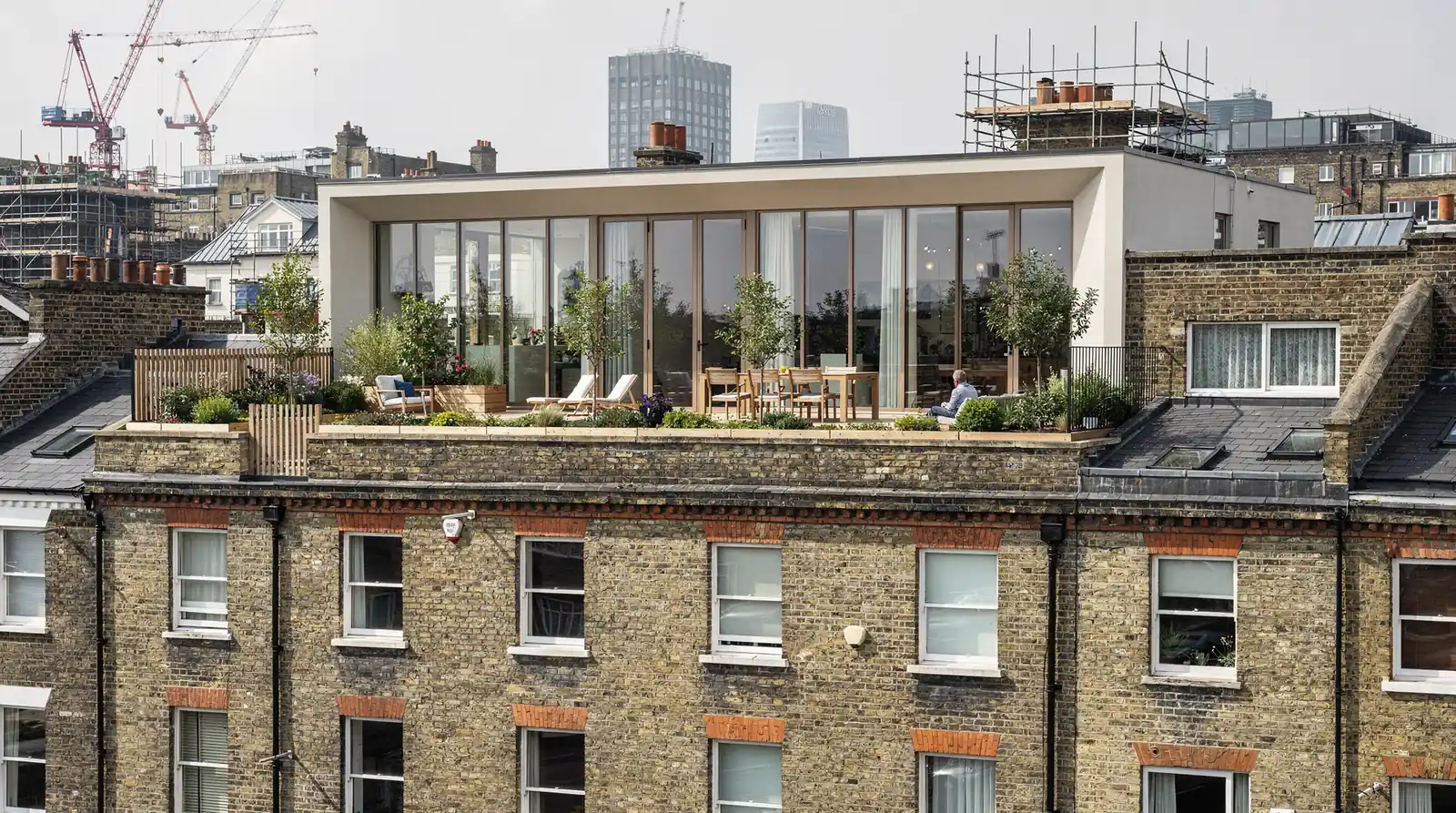
Airspace development means adding new floors on top of an existing building. The footprint stays the same, and the new homes sit in the space above the current roof.
The developer buys or agrees the rights to that space from the freeholder. The building’s structure, foundations and services are assessed, and new storeys are designed to sit within what the building can carry.
It starts with a structural survey. Engineers check the load the existing building can take before any design work begins. If the numbers work, design follows, then planning, then construction.
Lightweight construction matters. Modern methods of construction such as structural insulated panels (SIPs), light gauge steel and modular put less load on the building below, and much of the work happens off site. Systems that are BOPAS-accredited help lender and mortgage confidence.
Flat-roofed blocks are often the best candidates. Purpose-built blocks of flats, commercial buildings and mixed-use buildings can all work. Every building is different, so every site needs its own structural and planning assessment.
The developer still pays for the airspace rights, but that cost is usually lower than buying a cleared plot in the same street. This is the main reason airspace schemes can work in parts of London where ground-up sites rarely stack up.
The building already has road access, utility connections and an established address, which saves time and money compared with an empty site.
A well-run scheme often pays for work the building needs anyway, such as a new roof, an improved façade or refreshed communal areas. That makes agreement with the freeholder and residents easier, and improves the asset the new homes sit on.
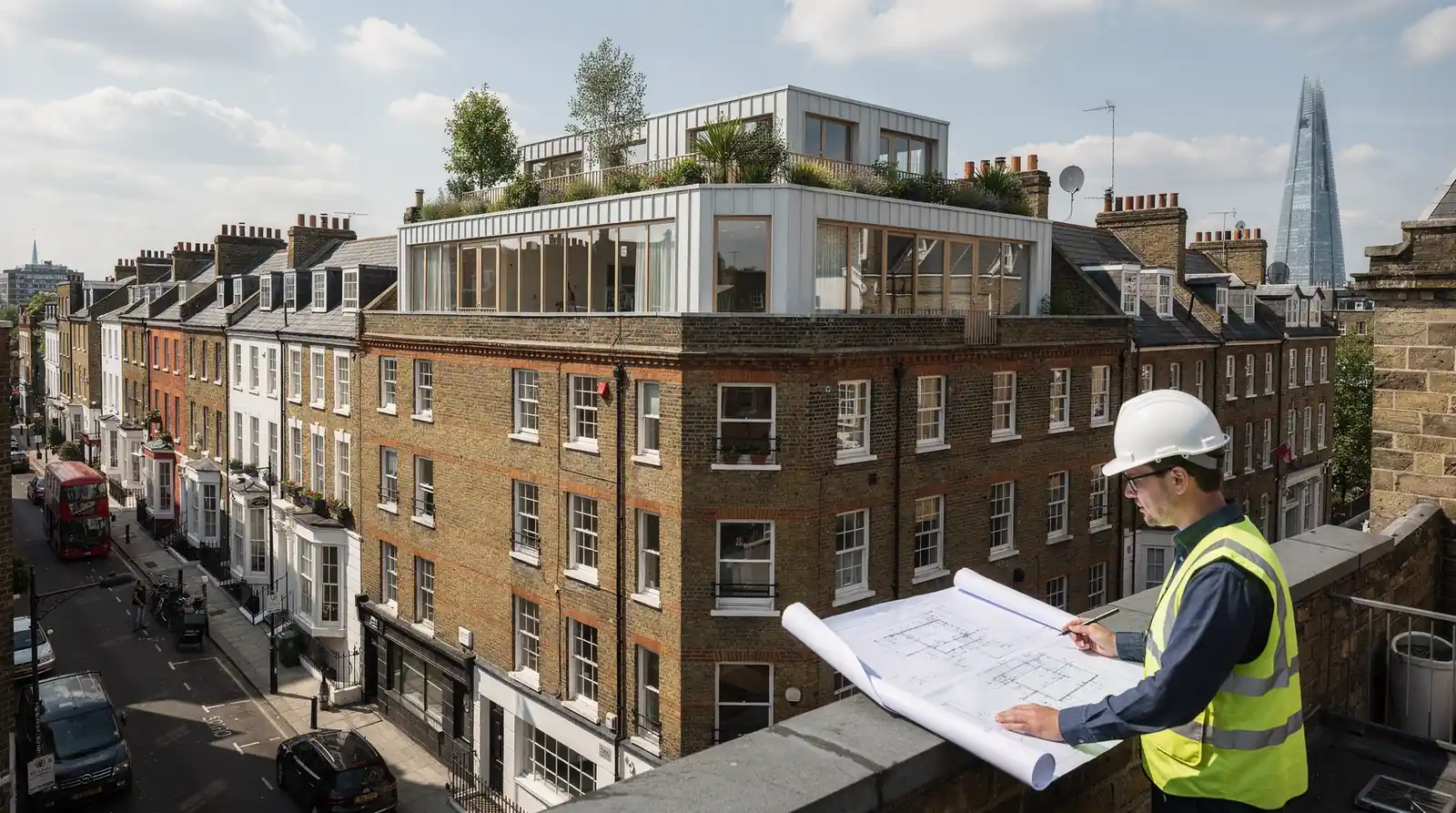
Some upward extensions can go through prior approval under permitted development rights rather than a full planning application. In broad terms this covers certain purpose-built blocks of flats and some commercial and mixed-use buildings, with limits on the number of extra storeys, height and impact on neighbours.
The rules are detailed and change over time, and many schemes still need full planning permission. Each site should be assessed against current policy before choosing a route.
This is why the delivery team matters. Airspace schemes need structural, planning and construction expertise working together from day one. We are currently delivering three airspace schemes in Bromley for one landowner, 16 apartments in total.
The airspace rights usually cost less than a comparable plot in London, but build costs can be higher because the work happens on top of an occupied building.
Flat-roofed blocks with spare structural capacity are often the best candidates. Every building needs its own structural survey and planning assessment.
Not always. Some upward extensions can use prior approval under permitted development rights, but many still need a full planning application.
Typically by co-investing in a scheme alongside a developer, ideally one that puts its own capital in too, so interests are aligned. You can read how we approach co-investment.
Capital is at risk. Property development investments are illiquid and returns are not guaranteed. This article is general information, not financial advice.
Tell us about it. You will speak to the people who make the decisions.